Need or Want? The Wrong Question
A watch he didn't need, a falaj whose water is shared by the stars, and a room with a sea view. Three stories that lead to the question every brand must ask.
 Abdulaziz Almaqbali

It was a quarter to one in the morning when Ahmed glanced at his watch for the last time. He had spent four hours on a booking site, going back and forth between two rooms in Bali that differed in only two things: a view of the sea and two hundred and fifty dollars. He stroked his beard like a sage about to settle a matter of great consequence, then told himself, "It's a trip. Enjoy it, Ahmed." He booked the room with the sea view. Since that night, he has never booked a room that doesn't look out on something beautiful.

I wrote about Ahmed in 2016, when I was preoccupied with a question I believed held the key to all of marketing: did Ahmed buy a need or a want? I built confident advice on the answer. If your product is a need, compete on price and function; if it is a want, compete on emotion and luxury. I even advised creating a new want, then presenting it to people as a need.
Years of building brand experiences later, I learned that the flaw was never in my answer. It was in the question itself. It splits a human being into two halves that no one actually lives by, and it distracts us from a far more important question: not what we sell to people, but what our experience does to their needs. This essay is an attempt to answer it, with help from an economist from Chile, a falaj keeper from Wadi Bani Kharus in Oman, and a watch I didn't need.
Needs Are Not Manufactured
Most conversations about needs begin with Maslow's famous pyramid: bodily needs at the base, then safety, belonging, and esteem, with self-actualization at the top. Countless strategies have been built on that pyramid, promising to "move the customer up" from one level to the next.
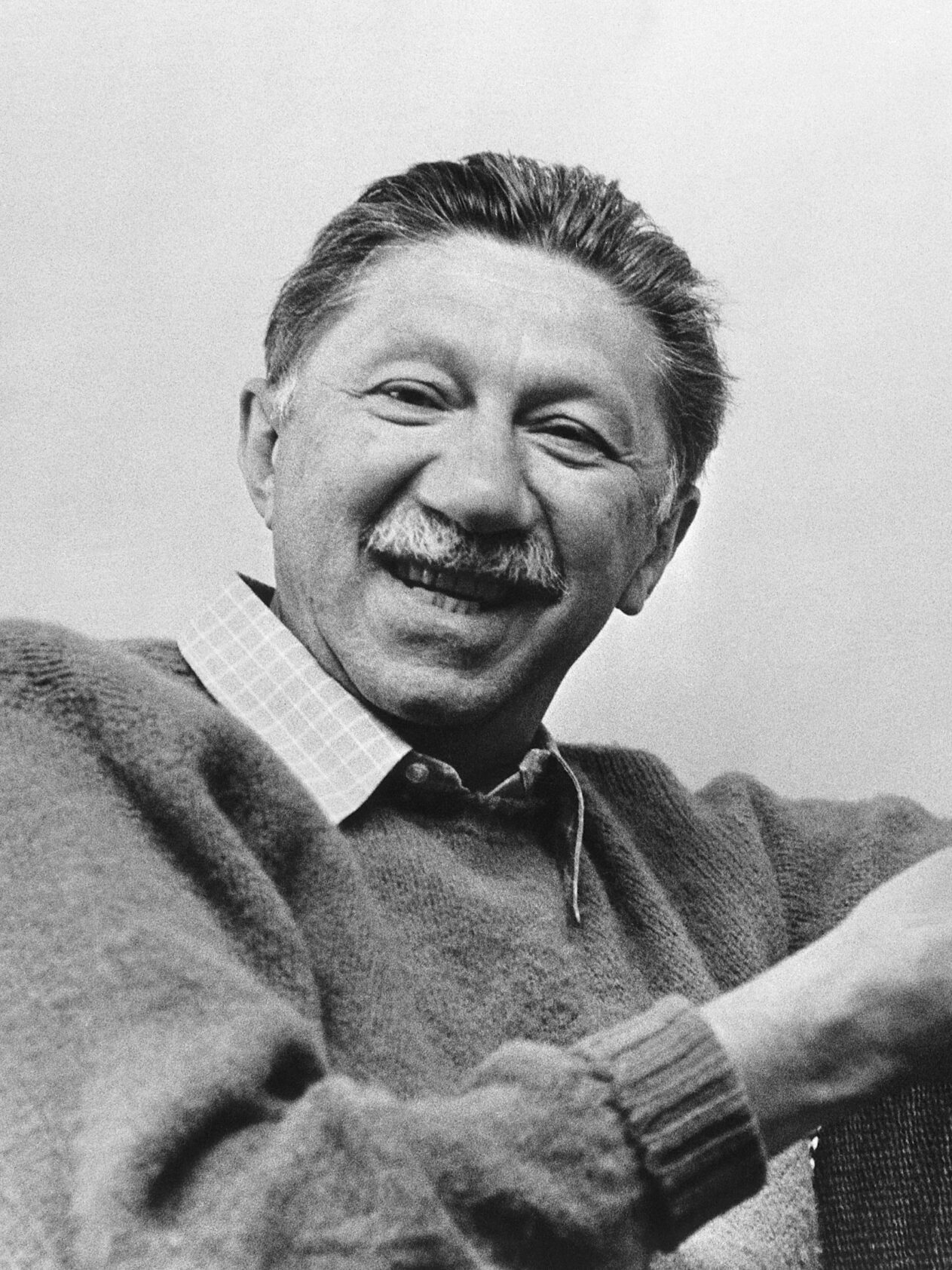
The irony is that Maslow never drew a pyramid. When he published his theory in 1943, he described needs as a flexible hierarchy full of exceptions, and noted that most people live with all their needs partially satisfied at the same time. As for the pyramid, three researchers traced its origins and found it in management textbooks, not in Maslow's work. Keith Davis drew the needs as a staircase in 1957, and consultant Charles McDermid turned them into a full pyramid in 1960 to present them to a business audience. The symbol became more famous than the idea, and drifted about as far from it as it could.
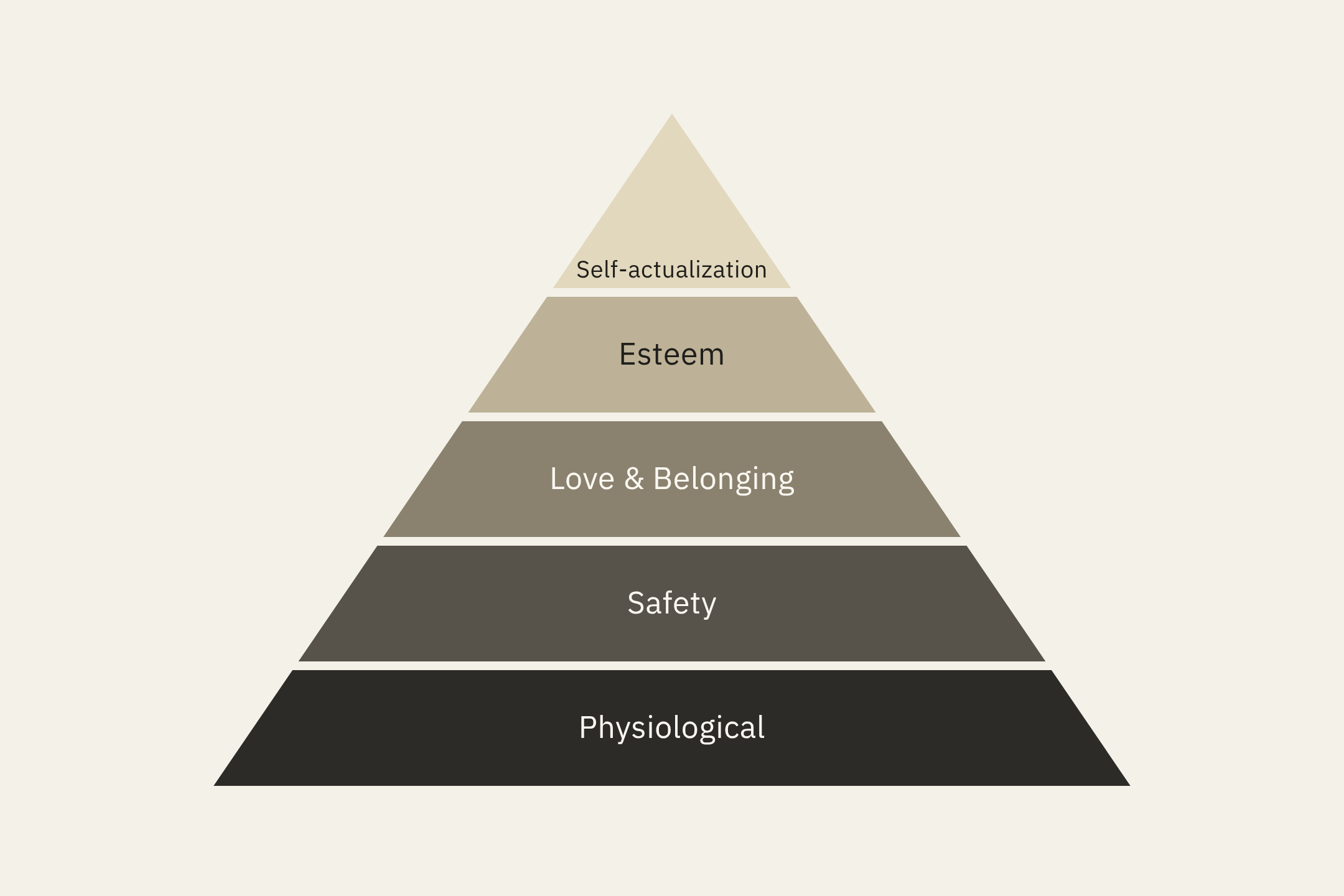
In the mid-1980s, a Chilean economist named Manfred Max-Neef arrived with a simple idea, one I consider among the most useful things a brand builder can know. He developed it with two colleagues, Antonio Elizalde and Martín Hopenhayn, and called it Human Scale Development.
The idea is that fundamental human needs are few, countable on two hands: Subsistence, Protection, Affection, Understanding, Participation, Leisure, Creation, Identity, and Freedom. They are the same for every human being. A shepherd on Oman's Green Mountain and a programmer in San Francisco need exactly the same things. These needs do not stand in a queue, each waiting for the one ahead to be served, as the pyramid suggests. They live together, all at once. Only one situation puts some ahead of others: when survival itself is threatened. Someone who cannot find food does not think about freedom, creativity, or belonging until they have found their next meal.
So what differs from one person to another? What Max-Neef called satisfiers: the ways we meet our needs. Food, for him, is not a need but a means of satisfying the need for subsistence. Hunger is the same everywhere, but an Omani answers it with a bowl of arsiya, slow-cooked rice and meat, while an Italian answers it with a plate of pasta.
Through this lens, Ahmed's question changes completely. The cheap room and the sea-view room are not a need and a want. They are two different ways of satisfying the same needs: leisure, protection, and perhaps identity too. The Ahmed who wakes up to the sea sees himself differently from the Ahmed who wakes up to a parking lot.
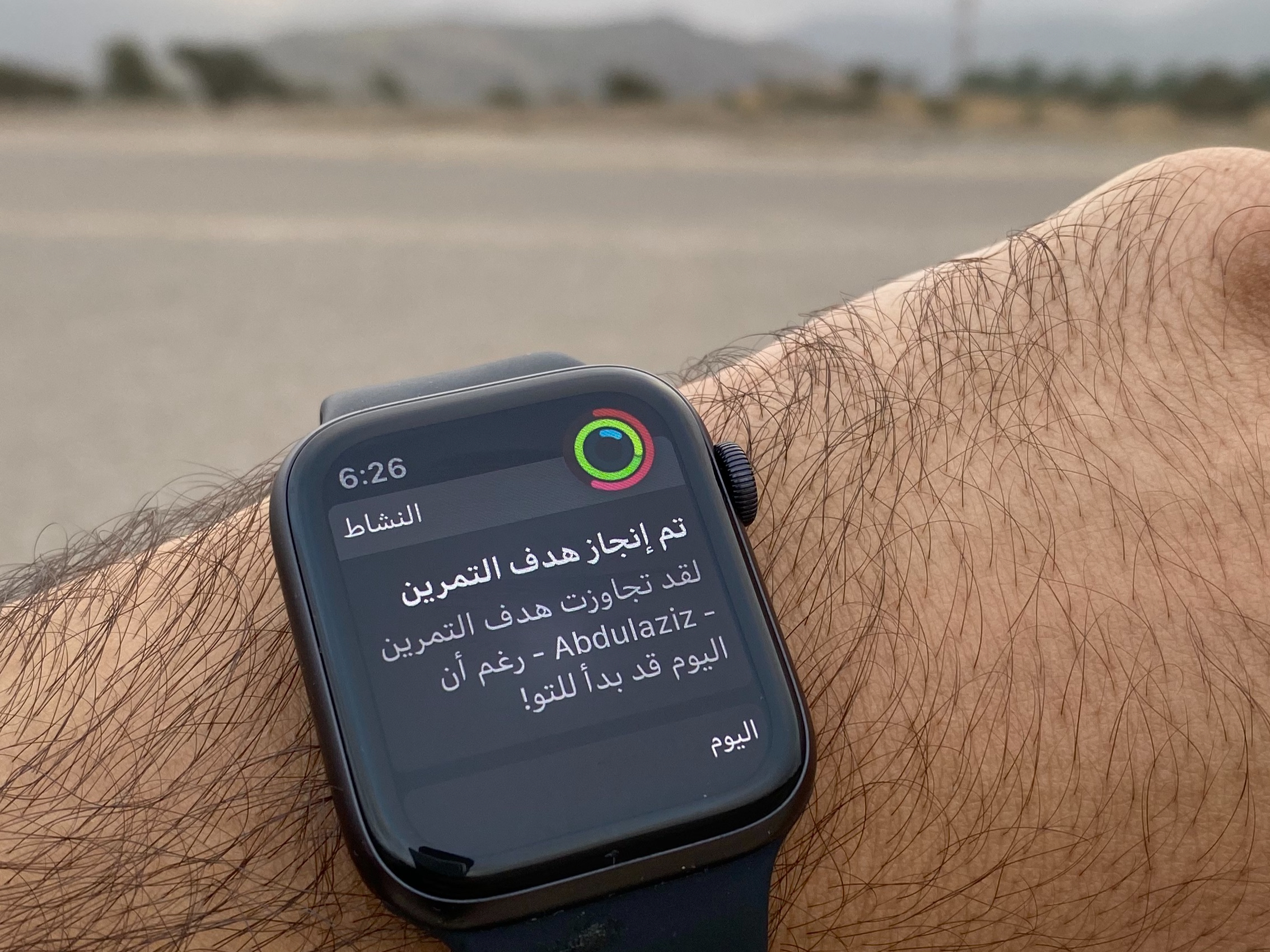
The same lens finally settled a personal question I had carried for years. When my dear wife gave me an Apple Watch, I didn't need it. I could live without it; I simply wanted to try it. After a few weeks of relying on it to tell the time, follow notifications, and track my activity, I began to feel that something was missing without it, especially on my walks. Back then I wrote that a want had turned into a need. Today I know that never happened. The needs were there before the watch: to protect my health, and to stay close to the people I care about. All that changed was that the watch became my favorite way of satisfying them, and then a habit. And a habit, when it is taken from us, leaves an emptiness that feels like a need. Think about that.
Here is a simple truth that is easy to forget: no marketing department in history has ever created a single human need. Needs came before us and will remain after us; all we create are satisfiers. That is where a brand's power and its responsibility both lie, because satisfiers, as Max-Neef discovered, are not all equal.
One Day, Five Satisfiers
Max-Neef divided satisfiers into five types and laid them out in meticulous tables. But who among us lives in tables, my friend? So let me tell them to you as an ordinary day, one that might be yours.
Your day begins in a government building, where you have come with your father to renew some paperwork. At the first window, the clerk says politely, "Uncle, you'll need a stamp from the other building." In the other building, they ask for a document no one has ever asked for before, then tell him the whole process has moved to an app. He opens the app, and the verification code is sent to an old number he gave up years ago. To update the number, he must go back to the first window. Nobody meant him any harm; every step was designed to protect him from fraud. Yet he walks out three hours later, exhausted, feeling he has become a burden on his son, and that the country he knew no longer knows him. The following week, a man with a calm voice calls him, says he is from the same agency, and explains everything with a patience he never found in either building. Then he asks for the code that has just arrived on his phone, "just so we can update your details." Your father gives it without hesitation. This was the first person who had spoken to him like a human being. This is what Max-Neef calls a violator: something that comes to you in the name of a need, then destroys it, wounding other needs along the way. For Max-Neef, bureaucracy is one of its clearest examples. It is built in the name of protection, then strips people of understanding, participation, dignity, and sometimes protection itself.
At noon, a parcel arrives that you ordered at two in the morning two weeks ago. You open it, smile, and put it in a drawer. I know this scene well; I have lived it many times. Things I bought convinced they would change my life, then never used once. They satisfied the moment of buying, not the need. This is a pseudo-satisfier: the feeling of satisfaction without the satisfaction. Max-Neef's examples include buying things that signal our status, or chasing every new fashion, believing it will make us someone. A luxury watch does not give you an identity, and the bag everyone carries this season does not set you apart from them. They only make you believe it for a while, until you need the next one. And every brand that promises in its campaign what it fails to deliver in its experience is building a pseudo-satisfier, however beautiful the campaign.
In the afternoon, you remember it's your sister's birthday. You open an app, choose a bouquet, and write a two-line card. The flowers arrive on time, your sister sends you a red heart, and the story ends there. This is a singular satisfier: it meets one need (her need for affection) faithfully, and touches nothing else. Amusingly, Max-Neef placed gifts themselves in this category. There is nothing wrong with that. Most services live here, delivering exactly what they promised, yet they rarely build a relationship. Had you carried the flowers to her yourself, shared a coffee, and laughed over an old photo, the flowers would never have been the gift at all.
At dinner, the family gathers around one dish, each of them inside a screen. In the 1980s, Max-Neef's example was commercial television, which gives us rest while robbing us of understanding, creativity, and identity. Our example today sits closer, in our pockets: apps that measure their success by the time we spend in them, satisfying one need to the point of excess while smothering everything around it. This is an inhibiting satisfier. In the company's office, the team celebrates because average time spent rose this month. At home, the family shares one dish in body, while their minds are each, as the Qur'an says of the stars, "floating in its own orbit."
That same night, in the village of Al-Hajir in Wadi Bani Kharus, the keeper of the falaj, the centuries-old channel that carries water through Omani villages, would raise his head, as keepers had for generations, toward a star aligned with the mountain's peak, and know that the water's turn had passed from one household to the next. The falaj was never just a water channel. It was life for the palms and the people, a partnership in dividing water fairly, a knowledge of a sky whose stars could be read, and an identity that gathered a village around its water. It is no coincidence that the word falaj comes from an Arabic root meaning "to divide into shares."

This is a synergic satisfier: it meets one need, and other needs rise along with it. Max-Neef's own example is among the most beautiful I have read: a mother breastfeeding her child, giving in a single moment nourishment, protection, tenderness, and belonging. Our grandparents never read Max-Neef, yet they built synergic satisfiers that lasted for centuries, and UNESCO inscribed five of them on the World Heritage List in 2006.
Our language has an old word for this: barakah, the quiet blessing that makes a little go a long way. In the Prophetic tradition: "The food of two is enough for three, and the food of three is enough for four." The food did not grow on the plate, yet it satisfied more, because it was eaten together: it eased hunger, joined hearts, and deepened belonging all at once. Barakah, in the language of strategy, is when a little satisfies far beyond its size.
As for my watch, it could be any of these five. If it alerts me to my heart, brings me a message from someone I love, reflects who I am, and reminds me of my wife, it is a synergic satisfier. If it interrupts every quiet moment with a notification, it is inhibiting. If I bought it to be seen on my wrist, it is a pseudo-satisfier. The watch is the same; the whole difference lies in the experience designed around it.
This does not mean every product must be a synergic satisfier. An electricity bill need not carry more meaning than it is; speed and honesty are enough. Nor does it mean luxury is inherently false. A watch a son inherits from his father can meet his need for identity, affection, and appreciation of a centuries-old craft. The measure is not price or category, but what the experience does to the person. And Max-Neef did not write for marketing teams at all, but for development economists in Latin America. His framework is a lens we borrow from him, not a marketing theory we attribute to him.
Why No Single Department Can Build a Synergic Satisfier
This is the idea I hope stays with everyone who builds a brand. A singular satisfier needs only one department: the product team builds a feature, and it meets a need. A synergic satisfier belongs to no one alone. When a watch on your wrist meets your need for protection, affection, and identity in a single moment, that is not the work of the design team alone, nor marketing, nor engineering. It is the work of a whole system that first understood who it is and what it means to people, then had every department serve that meaning from where it stands.
That is why I don't see integrated brand experience as a managerial luxury, or an identity project delivered and then forgotten. I see it as the only way to build synergic satisfiers. An organization divided into islands produces, at best, singular satisfiers sitting side by side, and at worst pseudo-satisfiers: a campaign that promises one thing, an experience that delivers another, and customer service that takes away a third.
I test this idea every day at Zados, a brand I co-founded, whose name comes from the Arabic zad: the provisions a traveler carries for the road. On the shelf, Zados is a range of date and nut bars, a singular satisfier that gives you energy halfway along the road. But we never wanted to sell a snack. We wanted to meet needs that lived in explorers long before us: clean energy without refined sugar, an identity in a line we repeat, "We are the explorers, we are the curious," stories that inspire them, and a community that brings them together. Even placement, finding Zados at the café and the fuel station before you set off, is an experience decision before it is a distribution decision. I don't claim we have arrived, but the question we ask of every decision has become clear: does this add another need to what we meet, or does it only sell a feeling?
A CFO might ask: what does any of this have to do with the numbers? Everything. A pseudo-satisfier lifts sales in the first quarter, then pays for them in returns, in customers who never come back, and in advertising that grows ever more expensive to replace those who left. An inhibiting satisfier lifts engagement metrics while quietly draining a trust that won't show on the dashboard until it collapses. A synergic satisfier builds what campaigns cannot: a customer who returns by choice to be satisfied again, pays without much haggling, and talks about you without being asked. Synergy is not only an ethical choice. It is the shortest road to loyalty.
Questions for the Brand Team
If the question is not "need or want?", what should a brand team ask instead?
What needs do we actually meet? Not what the presentation says about the product, but what people live through with us, from the first contact to the last invoice. Put the nine needs in front of you and ask honestly: where is our brand present, and where is it absent?
Where do we sell the feeling without the satisfaction? Look for the distance between what campaigns promise and what the experience delivers. Every gap there is a promise we were paid for and never delivered, and people will discover it sooner or later.
Which need do we profit from, and which do we smother along the way? Review your performance indicators; some of the greenest may be hiding a human need being drained in silence.
And who brings our departments together around a single meaning? If the answer is "no one," you will not find a synergic satisfier in your experience, however excellent your departments are. This is a question only the brand's leader can answer.
Held in Trust
Back to Ahmed and his room by the sea. Was it a need or a want? That question no longer occupies me. What does: what kind of satisfier was it? If the view gave him genuine rest, a quiet morning with someone he loves, and a memory he will return to years from now, it was a synergic satisfier worth every dollar. If he booked it to take a photo, post it, and go back to his phone, he paid two hundred and fifty dollars for a passing feeling. The difference is not in the room, but in what the room did for him.
And that difference is what should occupy everyone who builds a brand. I return to the falaj keeper in Al-Hajir, raising his head toward the star to know when the water passes from one house to the next. The water was never his, and he did not make a single drop of it, yet the village entrusted him with dividing it, as it had trusted those before him. We are the same. We did not create people's needs, but they entrust us with them every time they choose our brand. Either we divide as the keeper divides, fairly, on time, and with enough for everyone, or we sell people a feeling and move on. And people, even if they have never heard of Max-Neef, know the difference well, and remember it for a long time.